The College of Business and Management Sciences (CoBAMS), in partnership with the Uganda Bureau of Statistics (UBOS) has taken a significant step toward strengthening research capacity among its academic staff with an intensive five-week study workshop, aimed at equipping young researchers with advanced data modelling, visualization and analysis skills.
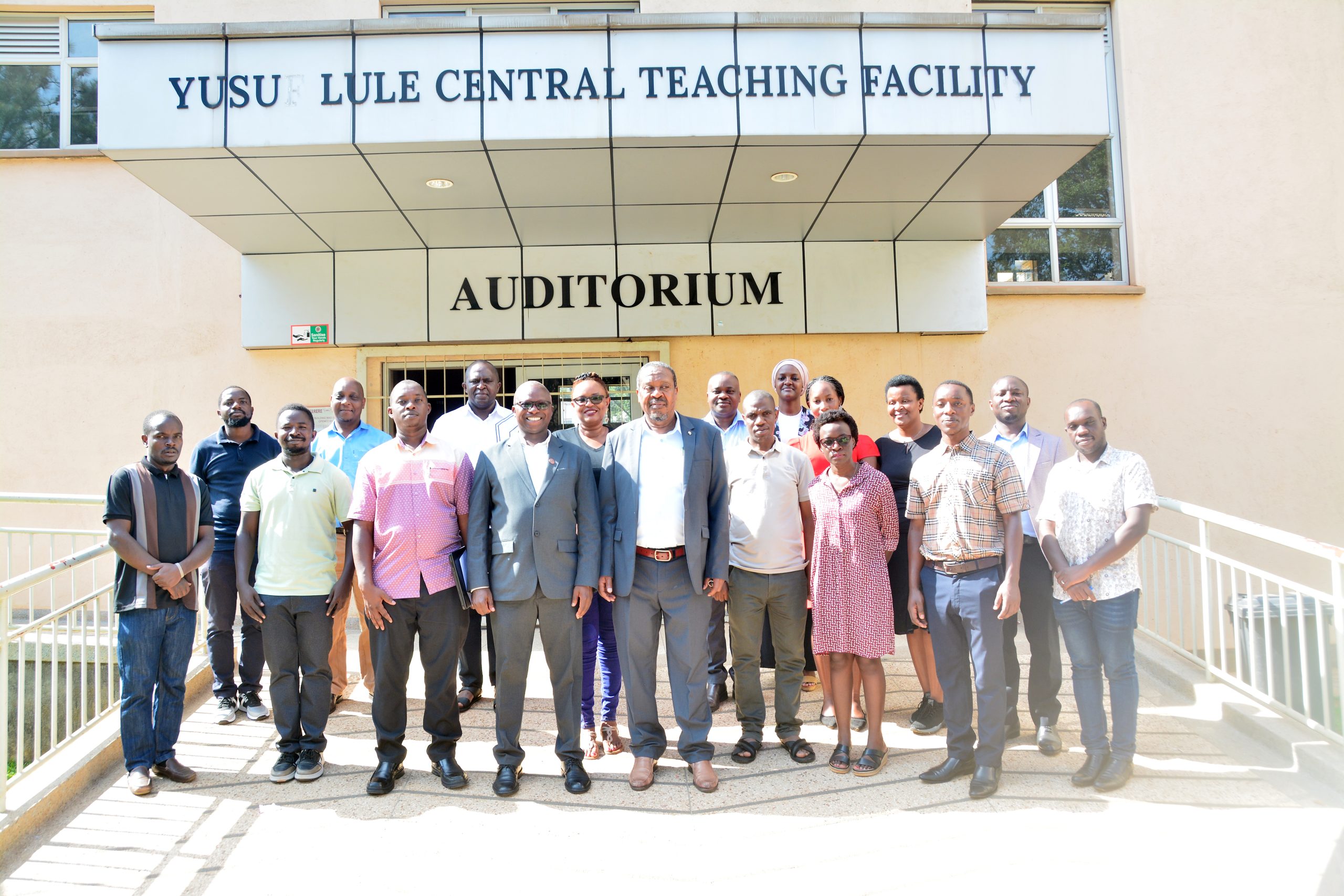
Officially inaugurated on Saturday, 11th April 2026, at Makerere University, the programme brought together an initial cohort of 14 participants in its first phase, with plans already underway to expand the training to more scholars in subsequent sessions.
Opening the workshop, Associate Professor James Wokadala, Deputy Principal of the College of Business and Management Sciences, described the initiative as both timely and strategic in strengthening the research capacity of academic staff at Makerere University and beyond. He noted that the workshop brings together academic staff actively engaged in research and is designed to enhance their competencies in data modeling and visualization – skills that are increasingly indispensable in both research and teaching.
He explained that the training was informed by lessons drawn from a previous affirmative action initiative through which the College provided modest research grants to support staff in producing working paper series. While the initiative yielded positive outcomes, it also revealed gaps in analytical capacity among some researchers. This, he noted, prompted the College Management to design a more structured intervention aimed at equipping, particularly younger faculty, with the skills necessary to conduct rigorous and competitive research.
The Deputy Principal emphasized the growing demand for high-quality research outputs that meet international publication standards, especially in high-impact journals indexed on platforms. He observed that contemporary research increasingly requires not only strong analytical techniques, but also effective data visualization, as traditional methods of presenting findings are no longer sufficient in today’s evolving academic landscape.
“It is increasingly evident that for academic work to gain recognition in today’s competitive research environment, it must be published in high-impact journals indexed in platforms such as Scopus and Web of Science. Achieving this standard requires not only rigorous analysis, but also the effective use of advanced data visualization techniques. Traditional methods of presentation are no longer sufficient; researchers must adopt more sophisticated and insightful ways of communicating their findings,” said the Deputy Principal.
The Deputy Principal acknowledged the participation of the Uganda Bureau of Statistics as a key partner in the initiative. He stated that the collaboration is anchored in an existing Memorandum of Understanding between Makerere University and the Uganda Bureau of Statistics. He explained that the partnership is expected to strengthen both the methodological and practical dimensions of the training, including future joint programmes and enhanced access to national data systems for both staff and students.
He commended participants for their commitment to the programme and encouraged them to actively engage in the training sessions, underscoring the importance of collaboration, constructive feedback, and interaction with facilitators in maximizing learning outcomes. He added that the weekend-based schedule had been deliberately designed to accommodate the demanding routines of academic staff.
Convinced that the true value of the initiative lies in the knowledge and skills participants will acquire, he encouraged participants to take full advantage of the opportunity to build networks and collaborate with colleagues across the College, emphasizing that such engagement is vital for fostering a dynamic and productive academic community.
The Deputy Principal thanked the College Management led by the Principal, Professor Edward Bbaale for providing the modest capacity training grant towards this noble training.
According to Associate Professor Leonard Atuhaire, the chief facilitator of the workshop, the training programme is anchored in a course that has previously been delivered to PhD students and was specifically designed for individuals with prior experience in data processing, data analysis, and the basic writing of research applications. He explained that the workshop seeks to build on this foundation by further strengthening participants’ analytical capabilities.
“The main objective of this programme is to ensure that by the end of the training, participants are able to confidently identify and apply the most relevant statistical techniques across different research programmes. Participants will begin by using a statistical package specifically STATA, which is the primary tool for this training while being encouraged to explore other statistical tools where applicable,” Associate Professor Leonard Atuhaire said.
He emphasized that a key outcome of the training is to enable participants to accurately interpret computer-generated outputs and present their findings in a clear, structured, and meaningful manner.
During the launch of the workshop, participants shared their expectations, which largely focused on strengthening skills in data modeling, statistical analysis, and data visualization using modern analytical tools. They expressed a strong desire to improve their ability to interpret and communicate research findings effectively.
The participants emphasized the importance of applying the acquired skills in their respective academic disciplines, including research, doctoral studies, and teaching. Many highlighted their intention to become trainers of trainers within their departments in order to spread the knowledge. The expectations reflected a shared commitment to improving research quality, enhancing analytical capacity, and fostering collaboration and knowledge sharing across the College.
Looking ahead, participants would be awarded certificates of participation upon completion of the training, further enhancing their professional development and positioning them for opportunities in projects and academic advancement. The initiative underscores the College of Business and Management Sciences’ continued commitment to nurturing a new generation of researchers capable of producing high-quality, data-driven insights that address both academic and real-world challenges.