June 15, 2026: The Vice Chancellor, Prof. Barnabas Nawangwe has called upon members of faculty and researchers at the College of Business and Management Sciences (CoBAMS) to harness the power of graduate training to change Africa’s research trajectory.
The call aligns with the research-led agenda of Makerere University-a strategic direction- aimed at positioning the institution at the forefront of producing the requisite human resources and innovations for Uganda’s and Africa’s transformation.
To reinforce his line of argument, the Vice Chancellor cited statistics that place Africa, which is home to about 16% of the global population, at a rate of only 3% of the world’s total research output.
Strongly convinced that Makerere University through its Colleges, Schools, members of faculty, researchers and graduate students, has the potential to undertake research to change Africa’s research trajectory, the Vice Chancellor challenged the College of Business and Management Sciences to optimize graduate training to channel out research, innovations and publications.
“The future belongs to research. Graduate training presents us with a critical mass of students, to be nurtured, trained and mentored in research, to produce research outputs and innovations. I am therefore here to discuss with you, and hear your views on maximizing the graduate research potential,” he said.
A case for the research-led agenda and graduate training
Established in 1922, Makerere University celebrated 100 years of excellence in 2022. The commencement of its second century, presented to the institution, a greater call of being a thought leader and a driver of impact-driven research and innovations.
Consequently, in the Strategic Plan, the leadership, staff and stakeholders, committed to the transformation of Makerere University into a research-led institution.
Graduate training was highlighted as a central pillar in the realization of the research-led agenda. Several strides have been registered including a record of 213 PhD graduates during the 76th graduation ceremony held in February 2026.
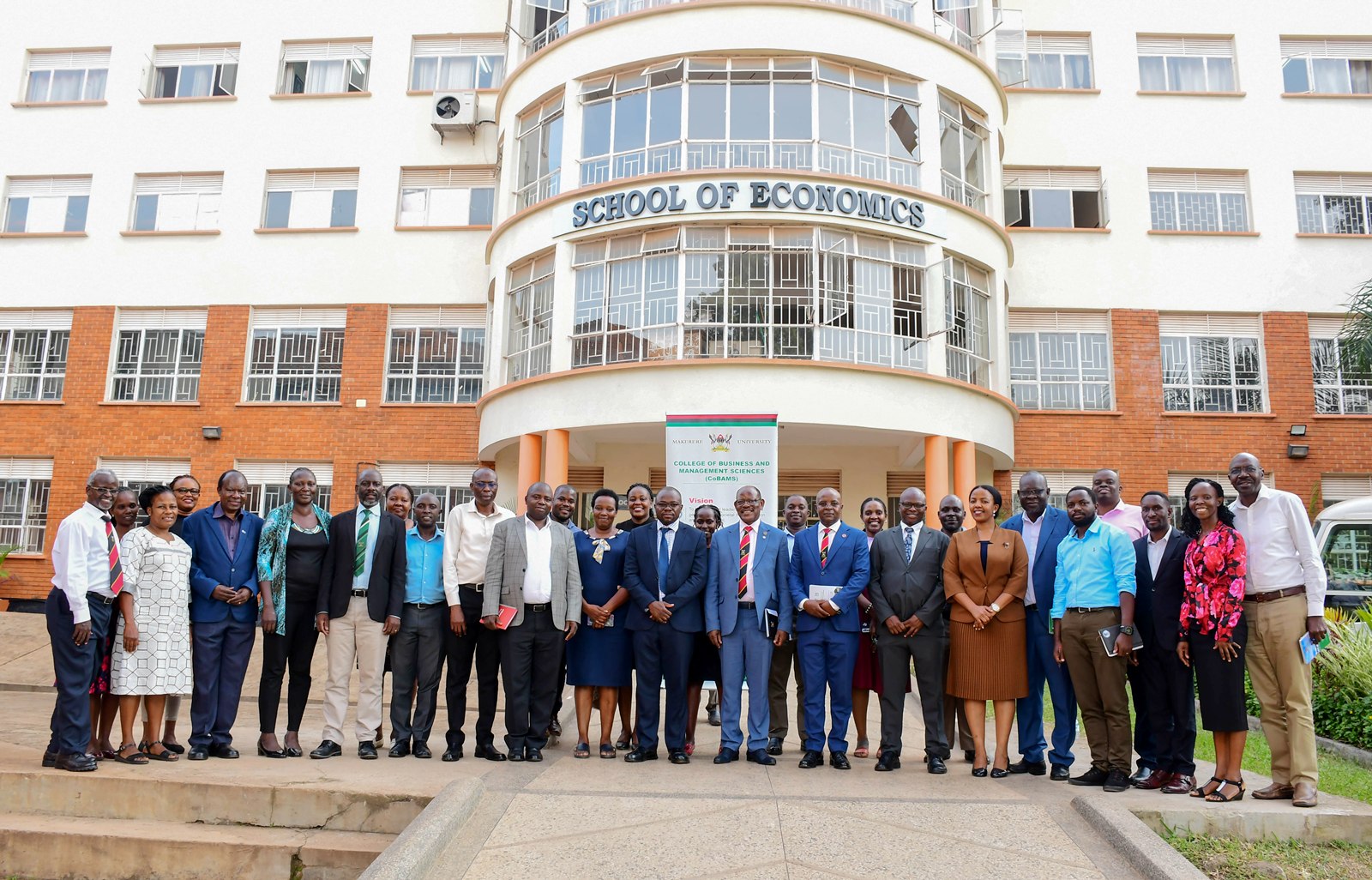
Driven by the prospects, the Vice Chancellor, Prof. Barnabas Nawangwe, on Monday 15th June 2026, held a strategic meeting with the leadership and staff at the College of Business and Management Sciences (CoBAMS) aimed at harnessing the power of graduate training to build a robust knowledge economy. He underscored the need to align graduate training, research and publications with the overall research-led agenda of the University.
The meeting brought onboard university officials central to graduate training namely Prof. Julius Kikooma-Director of Graduate Training, Associate Professor William Tayeebwa-Managing Editor of Makerere University Press, the publishing arm of the institution, Prof. Fredrick Jones Muyodi-Head of the Makerere University Writing Centre, Prof. Edward Bbaale-the Principal of the College of Business and Management Sciences, Associate Professor James Wokadala- the Deputy Principal, Associate Professor Ibrahim Mike Okumu-Dean, School of Economics, Associate Professor Godfrey Akileng-Dean, School of Business, Dr. Margaret Banga-Dean, School of Statistics and Planning, Heads of Departments, Coordinators of Graduate Training, members of faculty and researchers.
Strategies for increasing graduate student numbers
The Vice Chancellor stated that Colleges should work with the Directorate of Graduate Training and key stakeholders to increase the number of graduate students (Masters and PhD levels). To facilitate this strategic direction, the Vice Chancellor emphasized the need to adhere to the policy guidelines, supervision procedures, and coming up with innovative systems aimed at improving the completion rates at the graduate levels.
In his presentation, the Director of Graduate Training, Prof. Julius Kikooma focused on the area of PhD training, policy changes to spur graduate training, and the strategic targets of Makerere University.

Specific to the PhD by Research, Prof. Kikooma appealed to the Colleges to popularize this PhD track, and encouraged Schools and Departments to actively contribute to its successful delivery.
Responding to the challenge of workload cognizant of the low staffing levels in some academic disciplines, Prof. Kikooma guided that when filling in the template, the members of faculty should indicate both the teaching load (hours taught) and the supervision load.
Centres of Excellence and Research at CoBAMS
Presenting the research and graduate training strategy, the Principal, Prof. Edward Bbaale provided a brief profile of the five (5) Centres of Excellence, through which, the College champions research, innovations, entrepreneurship, policy engagement, community impact.
Prof. Bbaale expounded that the five (5) Centres of Excellence and Research provide a practical training ground and mentorship for graduate students (Masters and PhD levels).
The Centres of Excellence and Research include: Public Investment Management Centre of Excellence (PIM CEo), Environment for Development (EfD-Mak Centre), Entrepreneurship and Innovation Centre, Tumusiime Mutebile Centre of Excellence, Centre for Population and Applied Statistics, the African Centre for Climate-Sensitive Macroeconomic Modelling.
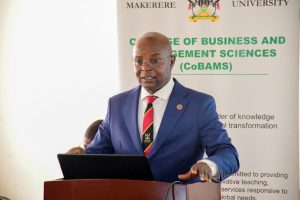
Vice Chancellor tasks CoBAMS to host more Centres of Excellence and Research
Reflecting on the significant contribution of Centres of Excellence research productivity and visibility, as well as, mentorship for graduate students, the Vice Chancellor tasked the College leadership to establish more centres.
“Centres of Excellence help to redirect research. I therefore task you, to engage the Schools and Departments so that the College hosts over ten (10) Centres,” he guided.
According to the Vice Chancellor, each department at the CoBAMS should host at least two (2) Centres of Excellence and Research.
Publishing with Makererere University Press
In addition to publishing in internationally recognized journals, the Vice Chancellor encouraged the College to come up with home-grown journals, and publish their work in Makerere University journals. He called upon staff to utilize the Makerere University Press, which is the publishing arm of the institution.
The Managing Editor of the Makerere University Press, Associate Professor Tayeebwa outlined that Makerere University journals are strategic instruments for: global visibility of Makerere University research, academic reputation and institutional ranking, knowledge dissemination and policy influence, strengthening postgraduate supervision and research culture, and attracting international scholarly collaboration.
The Managing Editor explained that the Makerere University Press was implementing a structured, standards-driven journal ecosystem where all journals meet the minimum international publishing standards. He added that the journals are developed intentionally for indexing readiness, and colleges take ownership of journal performance and sustainability, with the Makerere University Press providing the centralized technical and quality assurance support.
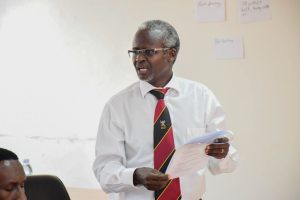
Specifically, Associate Professor Tayeebwa informed the audience that the Makerere University Press had worked with the College to produce the 2025 working paper series consisting of over 60 research outputs. He added that both entities were in advanced staged of producing the 2026 CoBAMS Working Paper Series, targeting over 80 research outputs.
With reference to the College by College Indexing Roadmap matrix, the Managing Editor highlighted that the College of Business and Management Sciences will feature the following disciplines: Economics, Finance, Accounting, Marketing, and Management. The Primary Indexing Ecosystem includes: EBSCO Information Services, ProQuest, SSRN, RePEc, and the Prestige Layer including Scopus and the Web of Science.
The Strategic Role of Graduate Training
Presenting the College’s position on graduate training, the Principal-Prof. Edward Bbaale reaffirmed that graduate training is the cornerstone of a research-intensive and innovation-driven university.
“Graduate training drives research productivity, publication output, grant competitiveness, and internal visibility,” he said. He noted that graduate training strengthens policy engagement, national development impact, and the University’s contribution to knowledge generation.
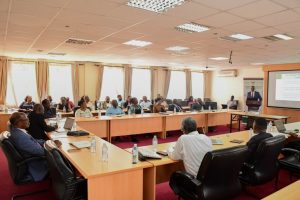
“Through our graduate programmes, the College of Business and Management Sciences contributes significantly to the University research-led agenda. The College hosts market-responsive and policy-relevant graduate programmes, which attract working professionals and practitioners,” he elaborated.
To illustrate that the demand for CoBAMS graduate programmes is very high, Prof. Bbaale shared an infographic message, with the Master of Business Administration attracting over 700 applicants.
Doctoral Training and Research Coordination
The Principal stressed that graduate coordinators are essential for programme management and quality assurance.
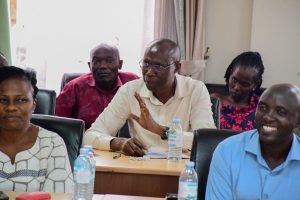
He pointed out that the College had appointed faculty and/or researchers to take on the following roles: Dr. Kasimu Sendawula-Coordinator for the College Doctoral Forum, Dr. Patricia Ndugga-Research and Grants Coordinator, and Dr. Peter Babyenda as the Policy Engagement Coordinator.
He implored the University leadership on the need for institutional recognition and support for graduate coordinators.
Research Productivity and Visibility
Prof. Bbaale reported that the College produced 60 working papers last financial year, and targets to roll out over 80 working papers this financial year.
He highlighted that the College and the Makerere University Press were in the process of developing discipline-based journals, a strategic approach aimed at institutionalizing a strong publication culture.
Recommendations
Building on the strides so far, the Principal advocated for strengthening the graduate infrastructure and ICT, provision of resources and incentives to facilitate graduate teaching, supervision and examinations, institutionalized support for doctoral fora, journals, and research dissemination, and approval to run the Executive Master of Business Administration in a project mode.
Calls to utilize the Makerere University Writing Centre
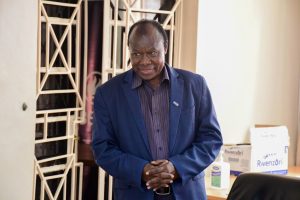
Prof. Fredrick Jones Muyodi, explained that the Makerere University Writing Centre constitutes a multi-disciplinary team, an attribute that positions the entity, as a university-wide unit with ability to handle all disciplines within the University.
Prof. Muyodi explained that the Makerere University Writing Centre has various programmes targeting early-career researchers, discipline-specific demands, and researchers in general.
He called upon the staff at the College of Business and Management Sciences to utilize the services offered by the Makerere University Writing Centre such as trainings and mentorship, grant writing sessions, and capacity building in policy brief writing techniques.