

By Moses Kibirango and Monica Meeme
Experts from Makerere University, College of Business and Management Sciences (CoBAMS), ACCA Uganda, Centre for Professional Courses or Base-wood Consultants, Equity Bank and the Institute of Internal Auditors (IIA) Uganda tasked students to develop practical skills, pursue professional training, build networks and practise financial discipline as they prepare for a competitive labour market.
The call to action was made on 15th October 2026, during the Makerere University Business and Finance Summit under the theme “From Campus to Career: Building Competence, Career Readiness and Financial Discipline.”
The summit focused on bridging the gap between academic qualifications and employability through practical skills, digital competence, entrepreneurship and continuous learning.
Held at Makerere University-Main Hall, the summit was organised by the Makerere University Accountancy Bureau (MUAB) in collaboration with ACCA Uganda, Centre for Professional Courses or Basewood Consultants, Equity Bank and IIA Uganda.
Call for Students’ Competence, Entrepreneurship and Integrity
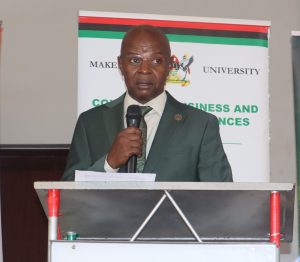
The Principal of the College of Business and Management Sciences (CoBAMS), Prof. Edward Bbaale, representing the Vice Chancellor of Makerere University Prof. Barnabas Nawangwe, noted that the employers increasingly seek graduates who can apply knowledge, solve practical problems, communicate effectively, demonstrate professionalism and uphold ethical standards.
“A degree may open the door to employment, but competence, character, and continuous learning determine professional success,” Prof. Bbaale. He encouraged students to complement classroom learning with internships, professional qualifications, digital skills and mentorship.
Emphasising financial-reporting principles, the College Principal reiterated that career readiness should extend beyond seeking salaried employment. “Uganda needs graduates who can establish businesses, create jobs and contribute to economic transformation,” he said. He inspired students to ask what problems they could solve and what value they could create for society.
On financial discipline and professional integrity, the College Principal emphasised that students need to develop skills in budgeting, saving and managing limited resources while maintaining honesty, accountability, transparency and ethical conduct. Prof. Bbaale guided that misconduct in accounting, auditing, banking and finance could damage institutions and public confidence, and advised students to protect their professional reputations.
He challenged the students who had participated in the Summit to come up with an action plan: identify a skill to develop, a qualification or career opportunity to pursue, and a mentor to guide their progress.
Calling for stronger partnerships among universities, professional bodies, employers, government and the private sector, Prof. Bbaale said Makerere University, through CoBAMS, reaffirmed its commitment to producing competent, innovative, entrepreneurial and responsive graduates to meet society’s needs.
Prioritize Career-Development Opportunities

The Acting Dean, School of Business in the College of Business and Management Sciences (CoBAMS), Dr Eric Nzibonera, encouraged students to take advantage of career-development opportunities amidst the intense competition for limited jobs.
“The School of Business would continue supporting engagements that contribute to students’ professional growth,” he stated.
Develop Job-Ready Skills and Solve Real-World Problems
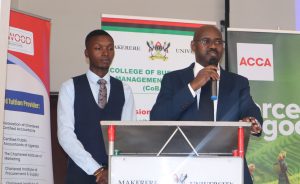
Dr Martin Bakundana, the MUAB Patron, stressed that the number of available jobs was significantly lower than the number of graduates entering the labour market. “Move beyond simply seeking employment and consider you could use your knowledge to solve real-world problems,” he challenged the students.
Underscoring the role of career preparation before graduation, Dr Bakundana asserted that students may aspire to work for organisations, and as such, engagements with the industry and prospective employers was a significant step.
He implored the participants to engage actively in the discussion, exchange ideas and build professional networks.
Integrate Academic Qualifications with the Ability to Perform Professional Duties
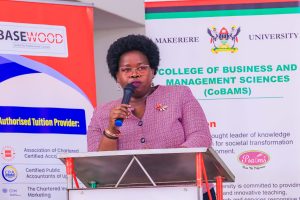
Hon. Faith Nakut, Woman Member of Parliament for Napak District, tasked the University students (in the third year of study) to develop competence, invest in personal growth and uphold ethical standards.
She implored students to integrate academic qualifications with the ability to perform professional duties, communicate effectively, respect colleagues and supervisors, take responsibility for their actions and handle organisational resources properly. Hon. Nakut advised graduates to set goals, pursue further learning and avoid comparing their progress with others.
Training and Adaptability as Finance Changes
Ms. Jackie Mbabazi, a Business Relationship Manager at the Association of Chartered Certified Accountants (ACCA), implored students to pursue recognised qualifications, mentorship and ongoing learning while adapting to technological change and evolving employer expectations.
Focusing on artificial intelligence and changing business models that are reshaping finance and creating career paths beyond conventional accounting, she said, “The world of business and finance is changing very rapidly, with AI evolving business models.”
She noted that ACCA was adapting its qualifications to meet employer needs, including a newly designed qualification for data-science professionals. She encouraged the students to explore ACCA qualifications and international career opportunities.
“Your career begins now. I implore you to make use of this summit,” she said. She acknowledged Makerere University for its long-term collaboration with ACCA.
Pursue Professional Certification and Uphold Integrity
The Chief Executive Officer of the Institute of Internal Auditors Uganda (IIA Uganda), Mr. Reuben Mupadha, encouraged students to pursue professional certification and uphold integrity as they prepare for internal auditing careers. He said the Institute supports students and aspiring professionals through university guest lectures, mentorship, career guidance and training.
Narrating his professional experience, he reaffirmed IIA Uganda’s collaboration with CoBAMS and pledged support for the association by becoming a platinum sponsor.
Competence must be Developed Before Graduation
An ACCA fellow and representative of Basewood Consultants, Mr. Francis Mutebi, stressed that competence must be developed before graduation. In a presentation titled “Building Professional Competence Before Graduation,” he asked whether students could use their degree knowledge to solve practical problems.
“A degree is the beginning, not the finishing line. It opens the door, but competence helps you to stay,” Mr. Mutebi said. He identified five pillars of competence: technical skills, digital fluency, effective communication, professional behaviour and commercial awareness. He stressed the need for integrity, punctuality, teamwork and respect as essential virtues.
Mr. Mutebi implored the students to invest in learning, practise their skills and demonstrate what they could do. “Every employer wants someone who can provide solutions. Invest in yourself to solve today’s problems,” he guided.
In a presentation titled “Internal Audit & Financial Discipline: Safeguarding Integrity in Your Career Journey,” Ms. Justine Nakagiri, IIA Uganda’s Vice President for Membership, encouraged aspiring professionals to consider Certified Internal Auditor (CIA), ACCA, Certified Public Accountant (CPA) and Certified Fraud Examiner (CFE) credentials.
She called on Auditors to understand the objectives of the organisations they serve and align their work with strategic priorities.
“Technology, skills and abroader understanding of organisational operations can help Auditors to contribute to performance and advance into leadership roles,” she said.
Employers Emphasise Interview Preparation and Workplace Skills

A panel of representatives from the National Social Security Fund (NSSF), PwC, the Institute of Infectious Diseases (IDI), the Deposit Protection Fund, SUMZ Foods and other organisations challenged the students to research prospective employers and demonstrate adaptability, initiative, teamwork and a willingness to learn.
During the panel discussion, the Senior Compliance Auditor at NSSF, Mr. Osbert Asiimwe, said employers want to hear candidates’ perspectives and assess how they approach practical problems. Mr. Asiimwe urged students to invest in personal development and prepare a clear answer to the question: What is your career plan?
Contributing to the discussion, the Deputy Head of Finance and Administration at the Institute of Infectious Diseases (IDI), Ms. Milly Laker, said careers in non-governmental organisations require agility, versatility and adaptability. She advised the students to take initiative, remain open to learning, consider voluntary service and develop multiple skills, including foreign languages.
Ms. Daphne Namatovu, Tax Manager at PricewaterhouseCoopers (PwC), emphasised business awareness, teamwork and the ability to work under pressure. Ms. Namatovu said candidates should understand clients’ needs, remain curious and commit to continuous learning. She added that students could develop workplace skills through academic responsibilities and other experiences, encouraging them to manage competing priorities, communicate with stakeholders and identify areas for improvement each year.
Ms. Linda Mukholi, Manager IT Audit at the Deposit Protection Fund (DPF), called upon the students to understand employers’ processes and expectations and maintain a professional appearance. She highlighted punctuality, reliability and a willingness to learn. She mentioned that candidates should understand their skills and the value they could bring to an organisation. She also stressed the importance of strong academic performance.
Ms. Mary Birungi Beatrice of SUMZ Foods said interview preparation should include learning about an organisation, its products and how a candidate could contribute. She encouraged students to explain what distinguishes them from other applicants and show respect for supervisors.
Partnerships and Continuous Learning for Career Readiness
The MUAB President, Mr. Bismarck Batwere noted that the Summit strengthens relationships among MUAB, Makerere University’s administration, Employers and sponsors while creating opportunities for students’ professional development.

He called upon the participants to enrol in short courses and pursue learning beyond university studies, assuring them that this would create opportunities aligned with MUAB’s three pillars and help students prepare for work.
The 2026 Makerere University Business and Finance Summit provided a platform for students and professionals to discuss employer expectations, career planning, professional qualifications, workplace conduct and changing demands in business and finance.