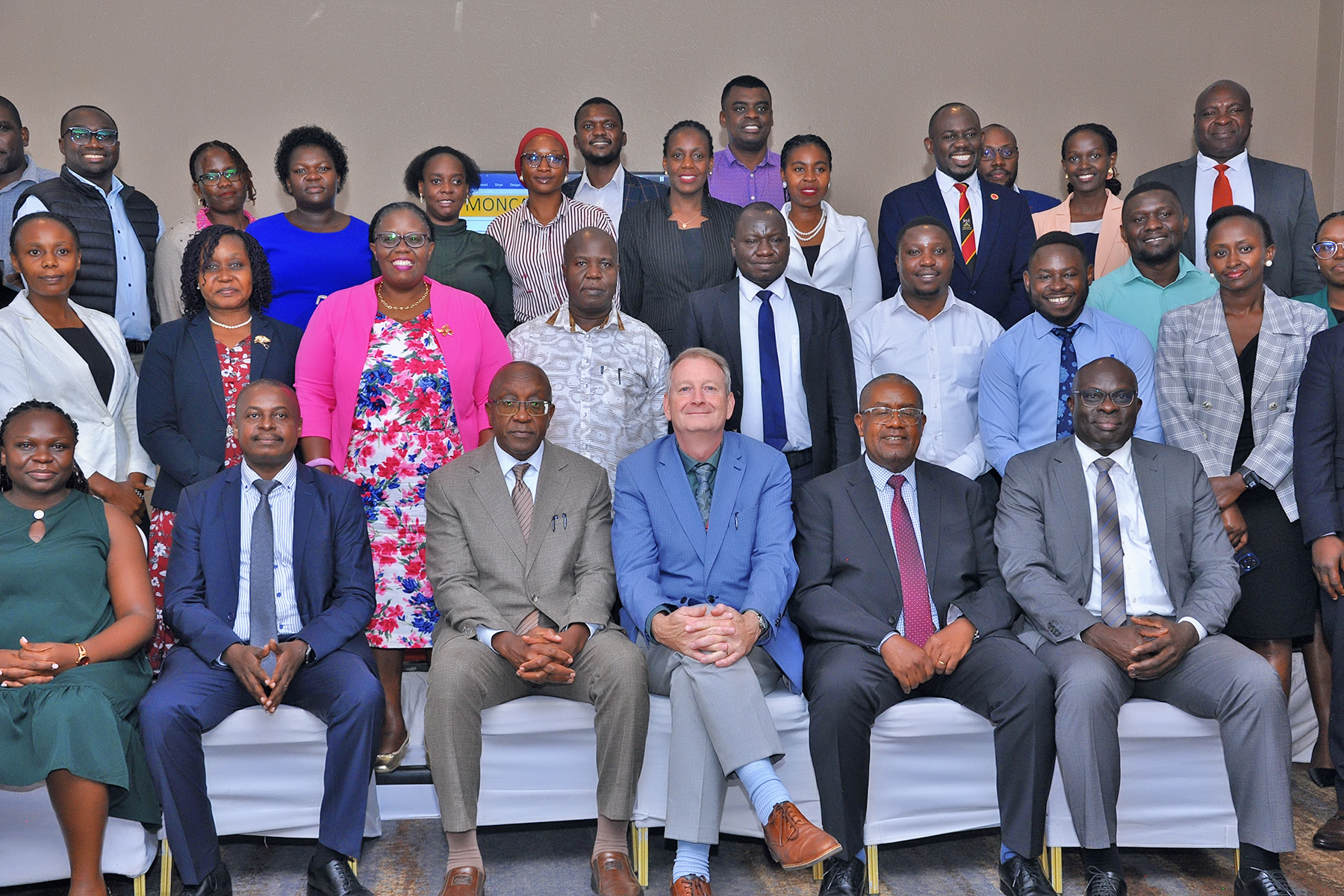
September 11, 2026: Today, marks the official launch of the Model for Natural Capital Policy Assessment (MONCAP) developed by Makerere University through the Environment for Development (EfD) Initiative Centre of Excellence at the College of Business and Management Sciences (CoBAMS) in collaboration with the Ministry of Finance, Planning and Economic Development (MoFPED).
During the pre-launch interview with CoBAMS Communication Office, the College Principal, and Director of the EfD initiative, Professor Edward Bbaale explained that the Model for Natural Capital Policy Assessment (MONCAP) was developed to support analysis of natural capital within the economy in order to inform policy decisions.
“The launch provides an opportunity to present the MONCAP model and accompanying manual, disseminate the policy briefs, and to officially hand them over to the Ministry of Water and Environment (MoWE) for adoption, use and institutionalization,” said Prof. Bbaale.
The new modelling tool is designed to help the government to assess the economic consequences of investing in, or failing to protect natural resources such as forests and water.
“The MONCAP is designed to assess the economic consequences and trade-offs of investing in natural capital versus failing to protect ecosystems, providing government ministries and public sector decision-makers with quantitative insights to align Uganda’s growth strategies with climate-sensitive macroeconomic modeling and sustainable development,” he articulated.
Launch of the MONCAP Model
Held on 11th September 2026 at Golden Tulip Hotel-Kampala, the official launch of the MONCAP, accompanying Manual and Policy Briefs brought together the government, researchers, academia and development partners to unveil a new tool for evidence-based policy.
Speaking at the official launch, the Permanent Secretary of the Ministry of Water and Environment, Dr Alfred Okot Okidi said: “Uganda’s pursuit of the Tenfold Growth Strategy must be accompanied by measures to protect natural resources underpinning economic activity.”
He stressed that the Government must answer a fundamental question as it pursues its 10-fold growth strategy–how to achieve rapid growth while safeguarding the natural resources upon which that growth depends.
Underscoring the value of collaboration, Dr Okot Okidi said: “I commend the Ministry of Finance, Planning and Economic Development (MoFPED), Uganda Bureau of Statistics (UBOS), National Planning Authority (NPA), Makerere University (Mak), Environment for Development Centre (EfD), GIZ and the Government of Denmark for this milestone.”
Dr. Okot Okidi said Uganda is at a critical stage. Its water resources, forests, wetlands, soils and biodiversity support agriculture, energy, industry and health, yet that contribution is often missed.
Natural Capital is an economic asset
“Natural capital is not simply an environmental sign, it is an economic asset. When forests are degraded, wetlands are lost, water is depleted or polluted, we are not simply losing environmental resources. We are undermining the resilience of our economy,” he stated.
The Permanent Secretary at the Ministry of Water and Environment argued that investment in protecting and restoring natural capital should be viewed as investment in economic stability, food security, climate resilience and long-term prosperity. Dr Okot Okidi noted the rising pressure from population growth, economic activity and climate change, with forest loss, land degradation and water stress already affecting livelihoods. He called on MDAs to institutionalize Natural Capital Accounting and MONCAP in the planning and budgeting processes.
GIZ calls for institutionalization
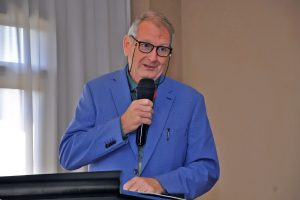
The GIZ Country Director, James Macbeth, described the MONCAP model as a major scientific achievement by Makerere University, and a positive outcome of the long-standing partnership between Germany and Uganda.
“The Makerere University research team has worked closely with government to translate the complexity between natural capital, climate change and the macro economy into a tool that can be used in policy analysis. It’s a sophisticated and impressive model,” Macbeth said.
He noted while the current phase focuses on water and forestry, its results indicate that water investment is about economic activity, employment and household welfare.
“The significance of the model-MONCAP- goes beyond environmental protection because water and forests constitute a significant part of Uganda’s productive economic base,” he said.
Additionally, “Natural capital such as water, forests, in Uganda is increasingly viewed not as an afterthought or an appendix-but as part and parcel of the capital base and productive infrastructure of the country,” he highlighted.
He outlined three priorities: institutionalization across ministries for policy and budgeting, strengthening the evidence base through regular data updates, and ensuring national ownership.
MONCAP will improve investment decisions
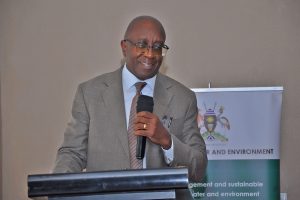
Engineer Gilbert Kimanzi, who represented the Permanent Secretary during the opening session said, MONCAP will enable the government to quantify the economic costs of failing to invest in water, irrigation, and other natural resources/assets. He guided that natural resources should be factored into budgeting and resource allocation decisions.
Reflecting on Uganda’s oil production ambitions which hinge on water, Eng. Kimanzi said: “If our water resources are threatened, that oil will not come out.”
He said conventional macroeconomic analysis inadequately reflects the value of forests, wetlands and water, and that MONCAP allows quantification of carbon credit assets, analysis of policies such as the rationalization of the National Forestry Authority (NFA), and trade-offs between immediate returns and long-term environmental costs. He advocated for champions across government ministries and agencies to institutionalize the model (MONCAP) in order to understand the cost of inaction.
Bridging the gap in conventional economic analysis
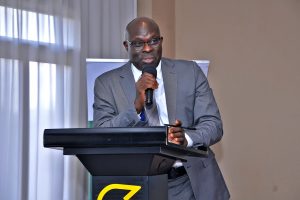
Presenting the technical overview, officials from the Ministry of Finance, Planning and Economic Development, Sam Mugume and Wilson Asiimwe, explained that MONCAP was developed to bridge the gap in conventional economic analysis, which has often failed to fully account for natural capital depletion.
“We have always known that economic growth depends on natural capital assets such as forests. But conventional analysis of economic growth has often sidelined natural capital assets because they have historically been viewed as a large stock that has always been available,” pointed out the officials from MoFPED.
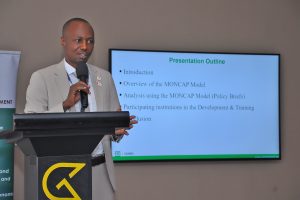
Wilson Asiimwe, a Senior Economic Modeller explained that the MONCAP was designed to make the macroeconomic value of natural resources visible.
About the MONCAP model
The model can assess the implications of investment and non-investment in natural capital, analyze the effects of government policies on forests and water, examine energy transitions, and assess climate-related policies.
The model captures stock, harvest and regeneration rates for natural forests, protected forests and plantations, and links water sources – surface, ground, precipitation – and energy sources – hydro, biomass, solar, wind, fossil – to production sectors. It operates as two-in-one: an unconstrained model assessing impacts of investing, and a constrained model assessing costs of not investing, including impacts on GDP, jobs, welfare and emissions.
Presentation of MONCAP Policy Briefs
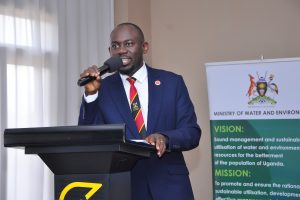
Presenting the Policy Briefs generated from MONCAP, Dr Peter Babyenda, a researcher at EfD and the Policy Engagement Coordinator at CoBAMS, said the model was designed to move government from recommendations to evidence-based action.
He demonstrated the ideas contained in the forestry policy brief as well as the second brief, which examined the potential macroeconomic effects of investing UGX 20 billion in the water sector.
He revealed that UGX 10bn investment in afforestation would raise the GDP by 0.02%, create 3,663 jobs, add 1,074 hectares of forest and cut emissions, while UGX 20bn in water would raise GDP by 0.04% and create 4,215 jobs.
He warned the ATMS 10-fold growth strategy will raise emissions to 2050 unless paired with energy transition, restoration and improved cook stoves.
The Panelists reinforced that MONCAP closes the “NDP erosion gap” by incorporating depletion and degradation costs into GDP calculations, translating ecosystem loss, as in the Mabira debate, into economic cost, and enabling green fiscal tools.
The Speakers agreed MONCAP’s value will be realized not at its launch, but through adoption, continuous use and capacity built since March 2025. The Makerere University research team called upon the participants and stakeholders to always remember: “What we measure in nature, we can model in the economy, and what we model, we can manage.”