By Julius Mugaga Tukacungurwa.
August 28, 2026: Makerere University College of Business and Management Sciences (CoBAMS), through its Environment for Development (EfD) Centre, has reaffirmed its commitment to advancing Inclusive Green Economy (IGE) policy in Uganda, as IGE alumni fellows and partners met to take stock of achievements and plan for emerging policy demands, including a national framework on green jobs.
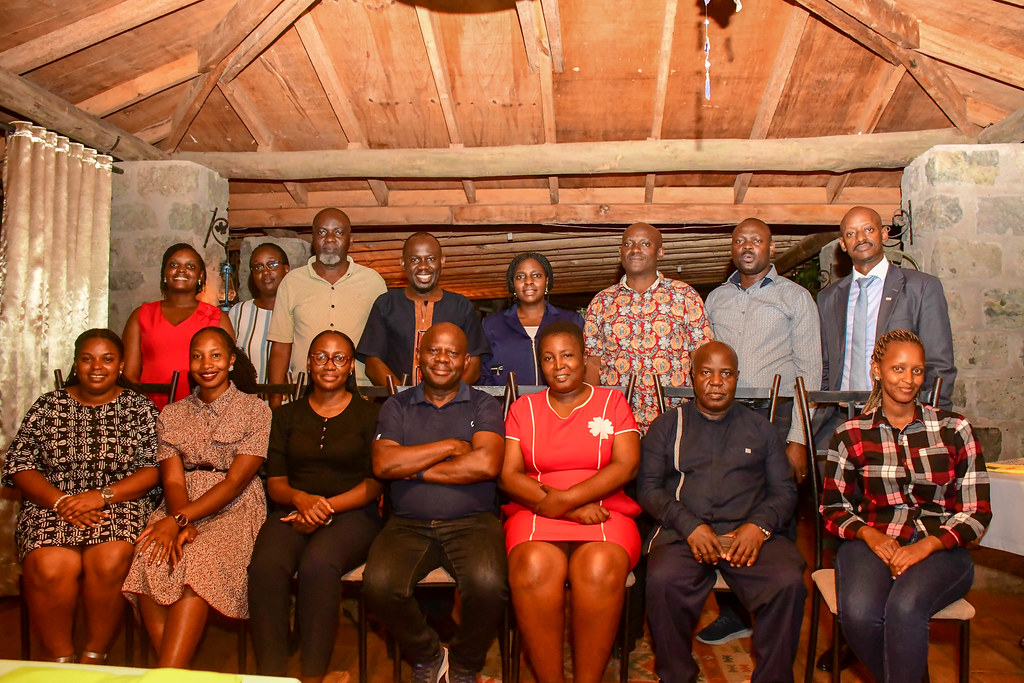
The engagement held on 28th August 2026 at Pardis Middle East Cuisine-Kampala, brought together IGE alumni from key government institutions and partner agencies to reflect on how training has translated into policy and practice.
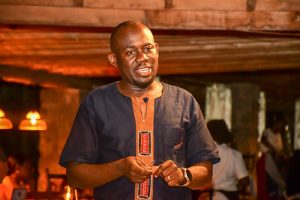
Speaking during the meeting, Dr. Peter Babyenda, Policy Engagement Coordinator at Makerere University College of Business and Management Sciences (CoBAMS) and IGE Policy Engagement Specialist, said the Centre continues to receive dedicated funding from Sida through the University of Gothenburg to build capacity of senior public servants in inclusive green economy.
“At our Centre, Environment for Development (EfD), we receive funds every year to the tune of about $100,000 to train senior public servants in inclusive green economy aspects. We train them on how to come up with green economic policy instruments that are inclusive. Inclusive means not leaving anyone behind, in enabling our people to embrace green economy issues: such as preserving the environment, e-mobility, clean cooking, greening and keeping our country clean, proper community forest management practices, better water management practices among others,” Dr. Babyenda said.
Dr Babyenda explained that the programme, which started in 2020, has now trained over 30 senior public servants drawn from strategic government entities.
“Every year we train five (5) IGE fellows from selected government entities, namely Ministry of Water and Environment since they are the custodians of our environment, Ministry of Finance, Planning and Economic Development since they are the funders and in charge of economic policy, National Planning Authority that is responsible for planning, and the National Environment Management Authority, the principal agency in Uganda for regulating, monitoring, supervising and coordinating all activities relating to the environment,” he noted.
Dr. Babyenda said the meeting provided a welcome platform to the latest cohort that graduated in June 2026 at Makerere University Makerere University Agricultural Research Institute Kabanyolo (MUARIK) into the growing IGE Alumni community of practice.
“When we meet, we discuss issues such as what have you achieved since we started, have you used the IGE knowledge and skills in any process of executing your duties. So that’s what we usually discuss and then we plan,” he said.
According to Dr. Babyenda, the programme has significantly deepened Makerere’s policy engagement beyond academia.
“This program has connected Makerere and mainly the College of Business and Management Sciences (CoBAMS) with the policy makers in the country. We no longer sit in the kitchen we are in the sitting room. We are participating in their conferences, and we are members of the technical working groups,” he said.
He cited concrete policy contributions including promotion of clean cooking with the Ministry of Energy and Mineral Development, contribution to the National Development Plan IV with the National Planning Authority, and the ongoing work on climate-sensitive macroeconomic modelling and natural capital accounting with the Ministry of Finance Planning and Economic Development
“When we meet here it is like accountability: what have you achieved, what can we say we have achieved, and then we take stock,” Dr. Babyenda emphasized.
He revealed that the next policy frontier for the group is developing a paper on green jobs. “We are being told that we should write a policy on a green job. When we talk about a green job, what is a green job? How do you measure it? When do you say this is a green job? So, we are going to work on that,” he said.
On sustainability and knowledge sharing, Dr. Babyenda disclosed that the program has a small grant to enable alumni be able to attend IGE related conferences within Africa.
“IGE at Global Hub, University of Gothenburg has put aside some funds. If these people want to go for conferences so that they can share knowledge and ideas, they can use those funds to cater for accommodation, air tickets. You should be going there to present on IGE so that other countries can learn from our experiences,” he said.
He also briefed members that the Sida-funded programme, which had a two-year pilot for Cohort One and Two and later a five-year phase will be expiring next year. We are hopeful that Sida will renew the funding given the tangible results of the program. I am glad to state that the recruitment for the 2026 cohort that will focus on studying the economic instruments for forests and water management, including watershed management, is underway, and the National Water and Sewerage Corporation has already nominated a fellow.

Delivering his reflections, Mr. Ronald Kaggwa, Manager Production, Trade and Tourism Planning at the National Planning Authority, commended EfD for bridging theory and practice.
Makerere University has increased its interface with the government. EfD has done very well to ensure that in addition to the books and theory, you are reaching out and working with the people,” Kaggwa said.

Ms. Catherine Mugisha, Program Officer Climate and Environment Unit at the Uganda Red Cross Society, called for broader inclusion of auxiliary institutions such as Red Cross in the IGE agenda.
“The Red Cross is an auxiliary to the government, and we are mandated by an Act of Parliament to operate and work alongside the government. There is a lot of work that we are doing around making our humanitarian activities green,” Mugisha said.
She noted that deforestation and catchment degradation are intensifying disasters, making the next cohort theme on forests and water catchment highly relevant to humanitarian response. “It would be good to include the Uganda Red Cross to register some of the works that have been done alongside what the government is doing from the perspective of humanitarian work,” she added.
The IGE programme continues to position CoBAMS and Makerere University at the centre of Uganda’s transition to an inclusive, low-carbon and climate-resilient economy, aligned to NDP IV, Vision 2040 and the Sustainable Development Goals.
The Inclusive Green Economy (IGE) in Practice programme at the Environment for Development Initiative (EfD) at Makerere University is an advanced in-service capacity-building initiative. The program is fully funded by Sida through the University of Gothenburg and is implemented in Ethiopia, Kenya, Tanzania and Rwanda. It targets senior public servants from MDAs, aligned to SDG 8, equipping fellows with theory, practical exercises and project support to implement CSA and real-world change work.