By Ritah Namisango and Monica Meeme
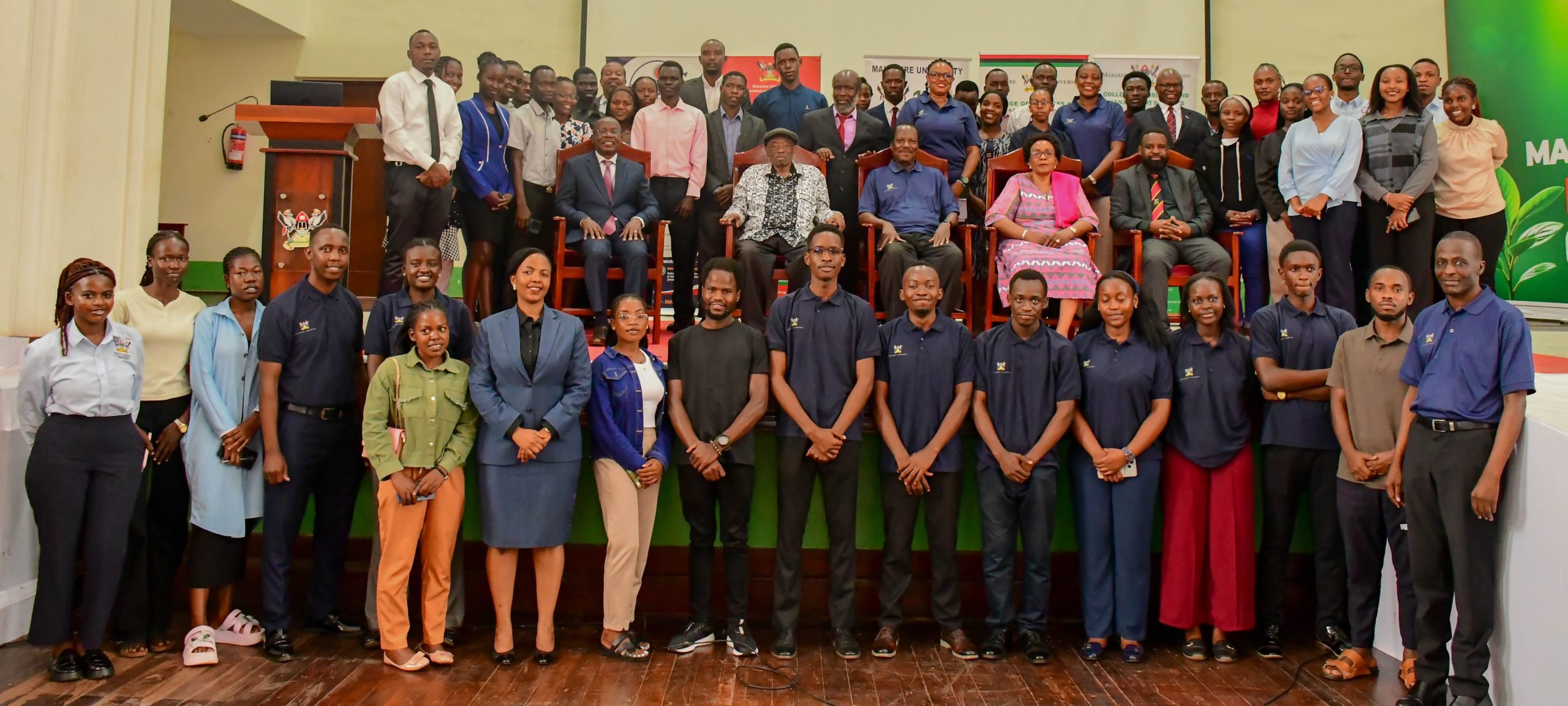
November 17, 2026: Makerere University’s College of Business and Management Sciences (CoBAMS), through the School of Statistics and Planning (SSP) and the Centre for Population and Applied Statistics (CPAS), hosted a high-level symposium on Tuesday, 17th November 2026, to commemorate Africa Statistics Day.
Held in the Makerere University Main Hall under the theme, “Institutionalizing WASH Statistics to Drive Sustainable and Climate-Adaptive Development in Uganda,” the event brought together statisticians, researchers, policymakers, development partners, academics, alumni, and students. The symposium highlighted the vital role of reliable data in strengthening water, sanitation, and hygiene (WASH) services across the country.
The day’s programme featured an opening ceremony, a keynote address, a research poster exhibition, an expert panel discussion, the presentation of appreciation awards, and a community service outreach activity.
Bridging Statistical Research and Public Policy

Delivering remarks on behalf of the Deputy Vice Chancellor (Academic Affairs), Prof. Sarah Ssali, the Director of Research, Innovation, and Partnerships, Prof. Robert Wamala, called for deeper collaboration among universities, government institutions, and industry to translate research into practical development solutions.
“Academic institutions need to strengthen research capacity, develop relevant methodologies, and generate evidence to address societal challenges,” Prof. Wamala said, conveying Prof. Ssali’s message.
Prof. Ssali commended the Uganda Bureau of Statistics (UBOS) for its leadership in producing official statistics and urged participants to generate actionable recommendations. She pointed to major research opportunities in WASH-such as using statistical models to identify communities vulnerable to water scarcity, mapping inequalities in safe water access, and planning climate-resilient infrastructure.
“Reliable statistics should not only describe development challenges, but also explain their causes, anticipate risks, and guide effective interventions,” she noted, encouraging students to apply their classroom knowledge through fieldwork and institutional engagement.
Advancing Evidence-Based Planning and Capacity Building
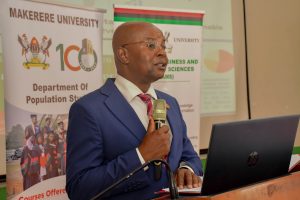
The Principal of CoBAMS, Prof. Edward Bbaale, emphasized that WASH investments directly drive public health, human capital development, labour productivity, and economic growth. He called for integrated statistical systems that merge climate, demographic, geographic, and environmental data to guide resource allocation and protect vulnerable communities. Prof. Bbaale also lauded the collaboration between SSP and the Statistics and Policy Analysis Support (SIPAS) initiative in advancing policy engagement.
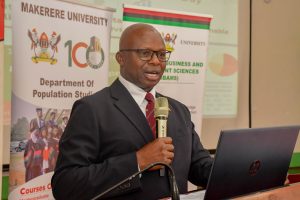
Echoing this call, the Deputy Principal of CoBAMS, Assoc. Prof. James Wokadala, noted that the 2026 theme aligns directly with Sustainable Development Goal 6 (SDG 6) on clean water and sanitation for all. He praised CPAS for expanding professional training and student internships, while applauding the Office of the Prime Minister, the United Nations Children’s Fund (UNICEF), and Kobe University in Japan for supporting inclusive research and social protection.
Addressing the students directly, the Dean of the School of Statistics and Planning (SSP), Dr. Margaret Banga, urged aspiring statisticians to embrace modern technology and sharpen their analytical skills.
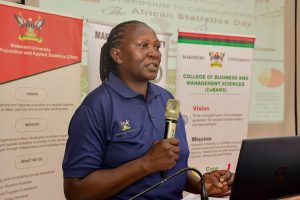
“A good statistician is not simply one who can generate numbers, but someone who can generate credible evidence and communicate it effectively to influence decisions,” Dr. Banga said. “You are not just studying for qualifications; you are preparing to contribute to the transformation of our society.”
Keynote Address: Modernizing WASH Data for Climate Resilience
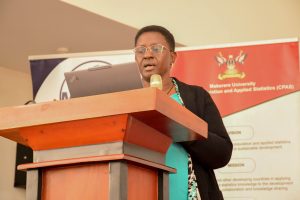
In her keynote address, Ms. Helen Leticia Namirembe Nviiri, Director of Population and Social Statistics at UBOS, described access to safe water and sanitation as a fundamental human right essential for public health, school attendance, and environmental sustainability.
She urged stakeholders to modernize data collection using digital tools and innovation. Citing SDG 6, Ms. Namirembe explained that Uganda tracks WASH progress using the National Standard Indicator Framework aligned with the National Development Plan, and implored students to ensure their data translates into targeted investments and improved living conditions.
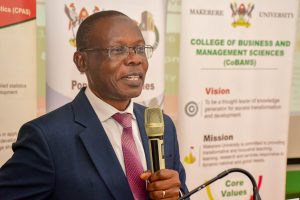
Adding a development partner perspective, UNICEF Consultant Mr. James Muwonge stressed the need for disaggregated data to uncover service delivery gaps affecting women, children, and marginalized communities. Citing the 2024 National Population and Housing Census, he advocated for standardized definitions, stronger local government capacity, and the adoption of Geographic Information Systems (GIS), satellite imagery, and big data to respond effectively to droughts and floods.
Poster Exhibition and Expert Panel Discussion
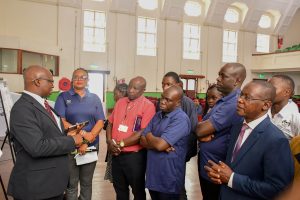
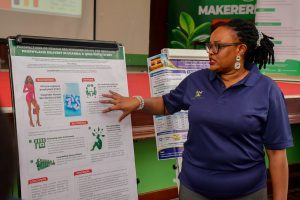
Alongside the plenary sessions, participants toured a Poster Exhibition showcasing innovative statistical research and student-led data solutions addressing Uganda’s water, sanitation, and climate challenges.
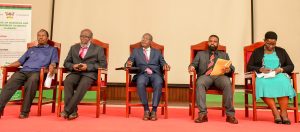
The symposium also hosted a dynamic Panel Discussion examining strategies to institutionalize WASH statistics across government and academia. The panel featured:
- John Ssekamatte Ssebuliba, Acting Head, Population and Social Sector Planning, National Planning Authority (NPA)
- Prof. Yovani M. Lubaale, Busitema University
- James Muwonge, Consultant, UNICEF
- Robert Wamala, Director of Research, Innovation, and Partnerships, Makerere University
- Helen Leticia Namirembe Nviiri, Director of Population and Social Statistics, UBOS
Recognition of Outstanding Contributions to Statistics
A highlight of the celebration was the presentation of Appreciation Awards honouring individuals and partners for their distinguished contributions to the statistics profession and community development:
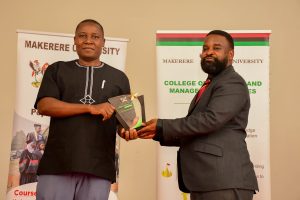
Dr. Abraham Owino Yeyo (Faculty Member, CoBAMS, Makerere University),
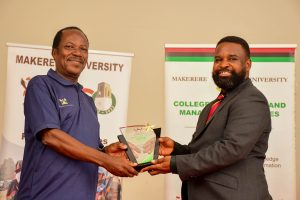
Dr. John Ssekamatte Ssebuliba (NPA), and Dr. E.S.K. Muwanga-Zake (Professional Statistician) were recognized for their exceptional dedication, distinguished service, and invaluable contributions to advancing statistics and academia.

Assoc. Prof. Katsuki Sakaue (Kobe University, Japan) was honoured for his collaborative partnership and generous support toward impactful, society-transforming research and innovation.
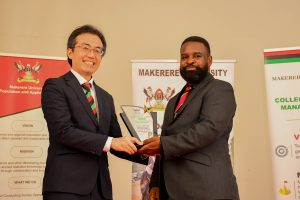
Mr. Tawanda Chinembiri (UNICEF Uganda) received an award recognizing UNICEF’s strong partnership in strengthening community outreach and improving the lives of children across Uganda.
Community Service Outreach
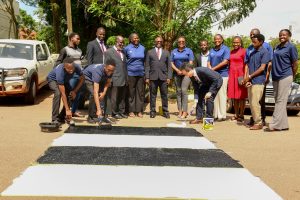
Bringing theory into practical action, the symposium concluded with a Community Service Segment, where faculty, guests, and students stepped outside the Main Hall to paint road humps along the University Road-promoting campus road safety and civic responsibility.
About Africa Statistics Week
Africa Statistics Week 2026 runs from 12th to 20th November 2026, anchored by the continental commemoration of Africa Statistics Day on 18th November. Held annually across Africa, the week-long observance promotes the use of reliable statistics in evidence-based policymaking, strengthens national statistical systems, and fosters collaboration between data producers and users to drive sustainable development.
PICTORIAL: