By Hasifa Kabejja and Ritah Namisango
Makerere University, through the College of Business and Management Sciences (CoBAMS), in collaboration with international partners, is implementing a Blended Intensive Programme (BIP) aimed at equipping a new generation of professionals in Africa and Europe with the knowledge and practical skills needed to understand and respond to complex, interconnected global crises.
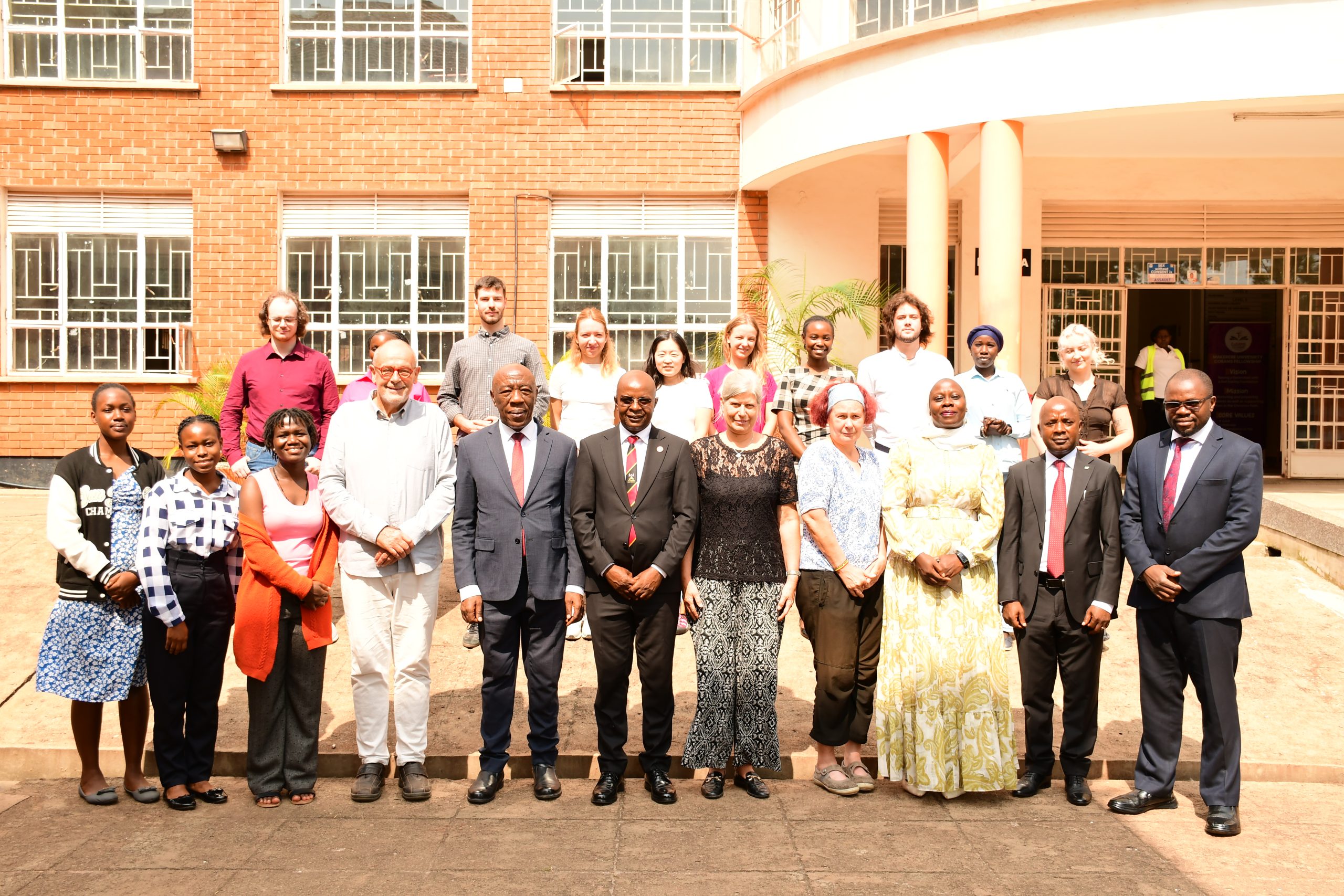
Held under the PolyCIVIS network, the programme, titled Enhancing Skills in Polycrisis Management: African and European Approaches, brings together participants from Makerere University, the University of Salzburg, the National and Kapodistrian University of Athens, and Universidad Autónoma de Madrid.
It was competitively secured under the 6th Call for CIVIS Blended Intensive Programmes by the Makerere PolyCIVIS team, comprising Prof. Edward Bbaale from the School of Economics, CoBAMS; Dr. Anthony Tibaingana from the School of Business, CoBAMS; and Dr. Kamatara Kanifa from the College of Agricultural and Environmental Sciences (CAES).
The European facilitators include Prof. Gudrun Zagel, Dr. Sabine Hennig, and Dr. Roman Puff, all from Paris-Lodron University of Salzburg, Austria.
Tackling the Growing Reality of Polycrises
Funded by the European Union through the Erasmus+ Programme under the Jean Monnet Networks, the initiative responds to the growing reality of polycrises – situations in which multiple crises, including climate change, pandemics, displacement, poverty, environmental degradation and economic instability, interact and compound one another, often resulting in consequences more severe than those of individual crises.
The BIP Workshop at Makerere University
The BIP combines virtual and physical learning to give participants both theoretical grounding and hands-on experience in polycrisis management.
During the virtual component conducted in May 2026, participants including students and academics from the participating institutions worked in interdisciplinary teams to analyze real-world scenarios, including climate disasters, refugee crises, pandemics and urban waste management. The students were required to develop and present polysolutions from the perspectives of different stakeholders, including governments, civil society and academic institutions.
The physical component, taking place in Kampala from 7th-11th September 2026, brings together students from across CIVIS consortium universities to complete the remaining course content, participate in practical activities, and develop solutions to real-world polycrisis challenges. It also provides participants with an opportunity to examine real-life Ugandan cases, including the Kitezi landfill disaster and the Bulambuli landslides. Through these case studies, students will explore how crises intersect with public health, environmental protection, poverty, security, and sustainable development, while gaining practical insights into integrated approaches to crisis management.
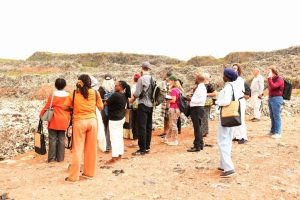
On the first day of the training, participants undertook an excursion to the Kitezi Landfill. During the week, they will also engage with experts from the Kampala Capital City Authority (KCCA), civil society and academia, and work in thematic groups to explore the legal, economic, sociological, historical, communication and educational dimensions of Kampala’s waste management challenges.
The teams will subsequently develop a Kampala waste policy paper and accompanying presentations, proposing integrated approaches to addressing the city’s waste crisis.

The learning approach incorporates case studies, simulations, role-play, guest lectures, peer learning, interdisciplinary teamwork, and problem-based learning. Participants are encouraged to move beyond identifying problems to developing practical and sustainable solutions.
Call for Integrated Approaches to Complex Global Challenges
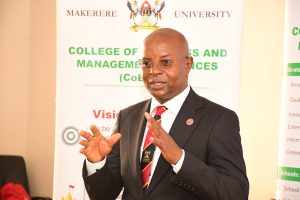
Officially opening the programme, Makerere University Vice Chancellor, Prof. Barnabas Nawangwe, represented by the Deputy Vice Chancellor (Finance and Administration), Prof. Henry Mwanaki Alinaitwe commended the team for securing the programme.
Addressing participants, he emphasized the need for universities to move beyond fragmented approaches to problem-solving and develop integrated responses to increasingly complex global challenges.
“Interconnected problems cannot be adequately addressed through fragmented solutions,” Prof. Nawangwe observed, stressing the importance of collaboration across disciplines, institutions, sectors and countries.
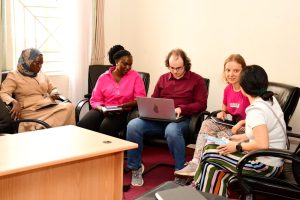
He noted that no single discipline or institution possesses all the knowledge required to address the challenges confronting societies today, calling for stronger integration of fields such as economics, public health, environmental science, engineering, governance, technology and the social sciences.
Embracing Innovative and Sustainable “Polysolutions”
Prof. Nawangwe further emphasized the importance of developing innovative and sustainable “polysolutions”- integrated responses that address multiple, interconnected crises while minimizing unintended consequences across other sectors.
He underscored the value of combining African and European perspectives, noting that while crises may manifest differently across regions because of differences in history, institutions and resources, challenges such as climate change, migration, pandemics, conflict and economic instability increasingly transcend national boundaries.
He described the partnership as an opportunity for mutual learning and co-creation of knowledge, rather than a one-way transfer of expertise.
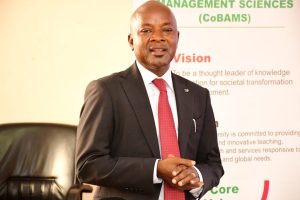
“We must bring these experiences into conversation and determine what works, under what circumstances, and how solutions can be adapted to different social, economic and institutional contexts,” Prof. Nawangwe said.
Collaboration Beyond the Blended Intensive Programme
The Vice Chancellor expressed hope that the collaboration would extend beyond the BIP into joint research, publications, teaching, student supervision and other sustained academic initiatives.
He challenged the participants to make the most of the opportunity by learning across disciplinary boundaries, questioning established assumptions and focusing on solutions.
“The world you are preparing to lead will require people who can understand complexity, work across institutional and disciplinary boundaries, and convert knowledge into practical responses,” he said.
Ebola Outbreak Demonstrates the Interconnected Nature of Modern Crises
The Vice Chancellor further observed that the postponement of the physical component of the training following the outbreak of Ebola underscored the interconnected nature of modern crises. He noted that a health emergency can quickly disrupt education, international mobility, economic activity and institutional planning.
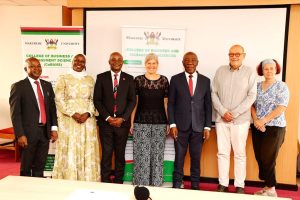
Appreciation by the Vice Chancellor
He commended the PolyCIVIS team and partner universities for bringing the initiative to fruition, expressing confidence that the programme would generate practical and innovative polysolutions to some of the challenges facing societies.
Strengthening international academic collaboration
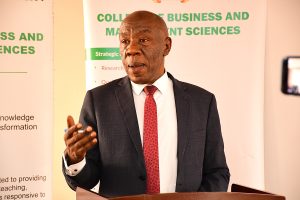
In his capacity as Principal of CoBAMS, Prof. Edward Bbaale described the programme as a significant reflection of the College’s commitment to fostering an integrated approach to teaching, research, policy engagement and international collaboration.
He noted that the increasingly complex challenges facing society require institutions and professionals to transcend geographical and disciplinary boundaries and collaborate across diverse fields of expertise.
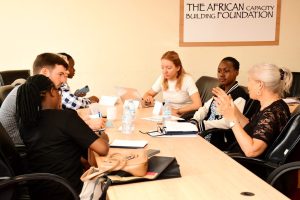
Prof. Bbaale further highlighted the value of bringing Makerere students and faculty into direct engagement with colleagues and practitioners from partner universities.
“Such engagements enrich the learning experience while creating opportunities for sustained collaboration in research, teaching and student supervision. For Makerere University, the programme represents a practical expression of its internationalization agenda, creating opportunities for students and academics from different countries to exchange knowledge, share expertise and work together to address complex societal challenges.”
Preparing future leaders for complex challenges
The programme seeks to enable learners to identify, assess and manage polycrisis situations in line with the UN Sustainable Development Goals (SDGs), while building competencies in addressing the social, environmental and economic dimensions of crises.
It also aims to develop practical skills in designing and evaluating integrated policies and polysolutions, including effective communication and public awareness strategies.
Ultimately, the initiative seeks to strengthen participants’ critical thinking, digital, spatial and 21st-century skills while promoting interdisciplinary and transdisciplinary collaboration.
The BIP also serves as a pilot initiative for the planned Joint Master’s Programme on Managing Polycrises under the PolyCIVIS framework.