Makerere Exhibition: CoBAMS showcases research and innovations
September 16, 2026: The Minister of Science, Technology and Innovations (STI), Hon. Eng. Jonard Asiimwe Akiiki, has called for stronger collaboration with Makerere University to translate research and innovation into practical solutions, enterprises, and economic opportunities for Uganda.
The Minister made the call during an engagement with Makerere University leadership, researchers, and innovators as he toured a showcase of research, innovations, and enterprise initiatives across the University anchored on the theme: “Research Infrastructure, Emerging Technologies and Enterprise Creation.”
Welcoming the Minister to the tour of the exhibition, the Vice Chancellor, Professor Barnabas Nawangwe commended the Minister on his quest to have a deeper understanding of the ongoing research and innovations at the different Colleges and research centres at Makerere University.
During the exhibition, various Colleges across the University showcased research and innovation initiatives aligned with Science, Innovation and Technology (SIT), highlighting Makerere’s contribution to advancing research, technological development, and enterprise creation.
CoBAMS showcases research and innovations impacting transformation
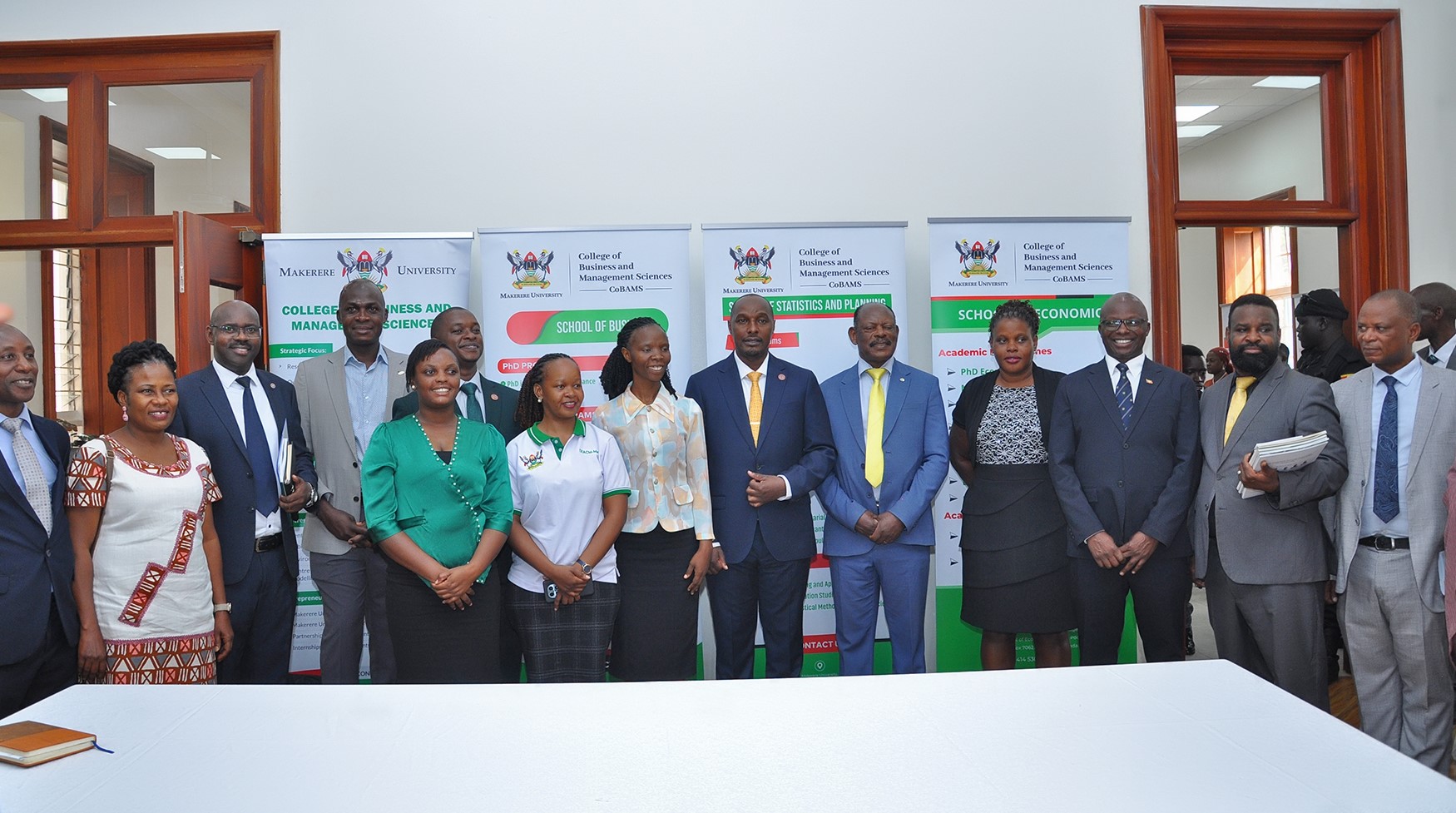
The College of Business and Management Sciences (CoBAMS) led by the College Principal, Professor Edward Bbaale brought together members of faculty, researchers and innovators who showcased research addressing a wide range of national development priorities.
The line-up of research at the exhibition included:
- The MONCAP model developed by Makerere University researchers for utilization and adoption by the Ministry of Water and Environment. The MONCAP (Model for Natural Capital Policy Assessment) was developed by Makerere University researchers based at the Environment for Development (EfD) Initiative CoBAMS in partnership with the Ministry of Finance, Planning and Economic Development, National Planning Authority (NPA), and the Uganda Bureau of Statistics (UBOS).
- The Clean Energy for Development research which aims at contributing to the realization of a sustainable energy transition and agricultural transformation. Through this research project, the Makerere University research team led by Professor Edward Bbaale, has come up with initiatives to build an economy that is resilient, inclusive and climate sensitive. The research team also exhibited the Maize Sheller machine, a key output of the research project.
- Information Dissemination Strategies for an Inclusive Energy Transition in Uganda’s Agricultural Sector as well as the Inclusive Green Economy Programme, and its correlation with industry and community transformation.
- Research featuring the Industrial Symbiosis and Scalability of Smallholder farming in Uganda, research outputs and tangible products from the Entrepreneurship and Outreach Centre, Energy demand and efficiency among firms and households, Promoting e-Mobility in Uganda, Ageism and dementia among older persons in Eastern Uganda.
- The Public Investment Management (PIM) Centre of Excellence, bridging research, education and outreach for innovation and economic development in Uganda.
- The Centre of Excellence for Africa Climate-Sensitive and Macroeconomic Modelling (CEACM) presented the Natural Capital Accounts models aimed at impacting sustainable development through mitigation of the adverse effects of climate change, as well as, the integration of the natural capital accounting into economic planning and budgeting.
- The Centre for Population and Applied Statistics (CPAS), which advances research, capacity building, innovation and outreach. The Centre strengthens data-driven decision-making through applied statistical analysis, population studies, and evidence-based policy engagement.
Research for an Inclusive Energy Transition
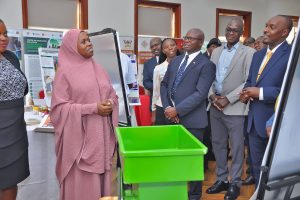
Presenting research titled –Information Dissemination Strategies for an Inclusive Energy Transition in Uganda’s Agricultural Sector, Dr Aisha Nanyiti, a researcher at CoBAMS and the Environment for Development (EfD) Initiative, emphasised the importance of ensuring that farmers have access to timely, accessible, and relevant information to enable them to adopt appropriate technologies and respond to climate and environmental challenges.
She highlighted stronger connections between research, technology and communities as critical to improving agricultural productivity and livelihoods.
Strengthening Sustainable Management of Natural Resources
Presenting the Inclusive Green Economy Programme, Dr Nicholas Kilimani, a researcher at CoBAMS and the Environment for Development (EfD) Initiative, stated that the programme provides senior government officials with knowledge and practical tools to address environmental and climate-related challenges.
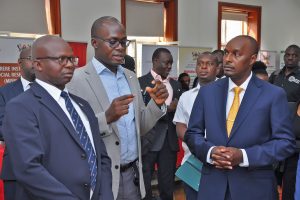
He also highlighted the MONCAP (Model for Natural Capital Policy Assessment) developed for the Ministry of Water and Environment to monitor Uganda’s natural resource stocks and losses, including forests and water resources.
“The model is designed as a surveillance and policy tool to support government in tracking natural resource use and promoting sustainable management,” he added.
Turning Agricultural Waste into Productive Resources
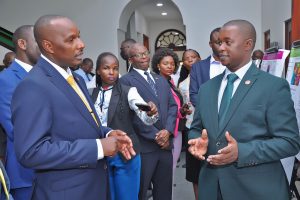
Presenting research titled –Industrial Symbiosis and Scalability of Smallholder Farming in Uganda, Dr Kasimu Sendawula, member of faculty at CoBAMS highlighted how farmers can maximise farm-generated waste, share resources, and adopt complementary production practices to improve productivity and incomes.
Dr Sendawula reported that industrial symbiosis offers opportunities to farmers to make better use of available resources while reducing waste.
He articulated that strengthening such practices could support smallholder farmers in transitioning from subsistence to more commercially oriented farming.
Strengthening Public Investment Management
Dr John Sseruyange, a researcher and faculty member at CoBAMS, highlighted the Centre’s contribution to improving public investment management.
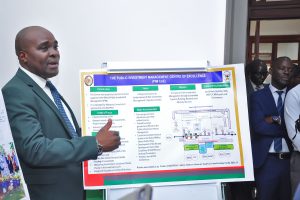
Dr Sseruyange noted that the Public Investment Management Centre of Excellence (PIMCOE) has trained more than 900 government officials, conducted research on public investment, and expanded its training activities at the regional levels including in Somalia.
“The Centre also supports the monitoring of project preparation to promote compliance with government standards, reduce resource wastage, and improve the effectiveness of public investments,” he asserted.
Promoting Student Entrepreneurship
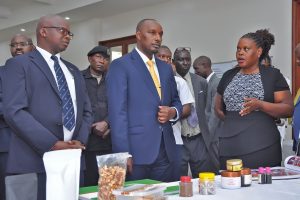
Presenting the contribution of the Entrepreneurship and Outreach Centre in nurturing student innovation and enterprise development at Makerere University, Dr Sarah Bimbona, explained that the Centre focuses on research, community engagement, and entrepreneurship development, with an emphasis on helping students transform innovative ideas into viable enterprises.
“Through the Annual Entrepreneurship Expo at Makerere University and stakeholder engagements, we provide students with platforms to refine their products, engage with industry, and explore market opportunities,” she stated.
Addressing Ageism and Dementia
Dr Stephen Ojiambo Wandera, a researcher and faculty member at CoBAMS presented research on-Dementia and Ageism among Older Persons in Eastern Uganda.
Dr Wandera reported that ageism and dementia were serious health challenges affecting the older persons. His research proved that the risk of dementia increases with age. He explained that isolation and living alone were key triggers of dementia. To address this, Dr Wandera called for stronger social connections and interventions to address the negative attitudes towards old people.