
By Monica Meeme and Ritah Namisango
July 29, 2026: Dr Aimable Nsabimana, a Senior Statistician at the International Finance Corporation (IFC) of the World Bank Group, has called upon academicians, researchers, policymakers, and young economists to embrace the power of administrative data as a tool for generating evidence, causality studies, improving policies, and addressing development challenges.

Reflecting on the theme, ‘Unlocking the Potential of Using Administrative Data for Economic Research and Policy Analysis, Dr Nsabimana asserted that the future of economic research will increasingly depend on the ability to leverage large-scale datasets, technology, and advanced analytical methods to generate reliable evidence.
“Research landscape is changing rapidly, driven by digital transformation, artificial intelligence, and the growing availability of administrative datasets,” Dr Nsabimana said. He urged young economists and statisticians to develop skills in data management, econometrics, and evidence-based analysis to remain competitive in the evolving global labor market.
The Seminar held on 29th July 2026 was organized by the School of Economics under the College of Business and Management Sciences (CoBAMS) at Makerere University.
Turning Public Records into Policy Evidence
Drawing from his experience, Dr Nsabimana highlighted initiatives such as tax data laboratories, including Uganda’s efforts through the Uganda Revenue Authority (URA) Data Lab, as important steps toward improving access to reliable information for research and decision-making.
Underscoring the value of administrative data, Dr Nsabimana said that government records such as tax, health, education, and business data, though collected for administrative purposes, can provide valuable insights into critical economic and social issues when properly organized and analyzed.

He added that administrative data can help researchers understand issues such as business growth, employment creation, productivity, inequality, taxation, financial inclusion, education outcomes, and public service delivery.
Learning from Global Experiences
Referring to Brazil, Dr Nsabimana explained that the country’s national labour database, maintained by the Ministry of Labour, contains detailed information on employees and firms, including workers’ education, occupations, employment histories, and demographic characteristics.
“Because the dataset covers the entire workforce, researchers are able to study labour market dynamics, job creation, inequality in employment opportunities, and the impact of policy reforms at a national level,” he noted.
Emphasizing the role of technology and artificial intelligence, Dr Nsabimana revealed how technological innovations are expanding the possibilities for data-driven research. “Properly recorded digital interaction or government service creates valuable administrative data that can be used to better understand how societies function and how public policies affect people’s lives,” he reported.
He affirmed that researchers do not need direct access to confidential company information. Instead, anonymized administrative datasets can provide comprehensive insights while protecting the privacy of individuals and businesses.
He encouraged students and scholars to read widely, study leading academic research, understand government policies, and develop research questions that respond to real-world challenges.
Protecting Data through Strong Governance
Dr Nsabimana emphasized that administrative data must be carefully managed to maintain public trust. “Sensitive information, including taxpayer records, financial information, and personal identifiers, requires secure systems, clear documentation, legal approvals, and strict confidentiality measures,” he added.
According to him, effective data governance is essential because institutions and citizens must trust that their information will be protected and used responsibly. He advised researchers seeking access to administrative data to demonstrate professionalism, ethical responsibility, and a clear commitment to producing research that benefits society.
He identified several areas where researchers can apply administrative datasets, including:
- Business development and firm performance using tax and enterprise data
• Employment and wage dynamics using employer-employee records
• Education outcomes using examination and school records
• Health policy using health management information systems
• Financial inclusion using banking and credit data
• Climate and development research using geospatial datasets.
He challenged the next generation of economists and statisticians to move beyond traditional approaches and become leaders in producing evidence that helps governments understand what works, why it works, and how policies can deliver better outcomes for citizens.
Dr. Nsabimana called for stronger collaboration between governments, universities, and researchers to unlock the potential of administrative data across Africa.
Embracing Administrative Data for Evidence-Based Research and Policy Solutions

Welcoming the participants, Dr Peter Babyenda, Policy Engagement Coordinator at CoBAMS, emphasized the growing importance of using existing data resources to advance research, innovation, and evidence-based policymaking.
He encouraged researchers to embrace innovative approaches by utilizing the wealth of administrative data available in Uganda, noting that datasets generated by institutions such as the Uganda Revenue Authority (URA) provide valuable opportunities to study firm dynamics, taxation, policy reforms, exports, employment, health, electrification, infrastructure, and productivity.
He encouraged researchers, faculty and students to use administrative data to produce high-quality research that informs policy, improves institutional efficiency , and supports economic reforms and development. “Now is the time to be innovative and make use of the wealth of administrative data available in our country to produce research that creates impact,” he said..
Optimizing the usage of URA Data in Research

Associate Prof. Ibrahim M. Okumu, Dean of the School of Economics at Makerere University, highlighted the strong research potential of Uganda Revenue Authority (URA) administrative data, describing it as a valuable resource for producing high-quality research for leading international journals.
He noted that administrative data enables researchers to generate stronger evidence on the causal effects of policies, offering greater policy relevance than conventional secondary data.
The Dean cautioned researchers to take greater advantage of the data, emphasizing that local academics possess a deeper understanding of the country’s context and are therefore better positioned to produce impactful and policy-relevant studies.
Highlights from URA on Lab Data

In his presentation on URA Lab data, Mr. Sebastian Ssebuyira, a Research Expert at Uganda Revenue Authority (URA), stressed the importance of equipping students and emerging researchers with the necessary skills to effectively use administrative data for research and policy analysis.
He noted that as the availability of large administrative datasets continues to grow, researchers must develop the technical skills required to access, manage, and analyze these resources. Building capacity in data handling and analytical tools is essential for transforming raw administrative records into meaningful evidence that can support decision-making.
Mr. Ssebuyira encouraged stronger collaboration among researchers, institutions, and data-holding organizations to improve access to national datasets. “Partnerships are critical in creating opportunities for researchers to engage with available data resources and conduct impactful studies,” he explained.
He encouraged students and researchers to make use of established data platforms and research facilities, including data labs, where they can gain practical experience working with administrative datasets.
Advancing Causal Research through Administrative Data

Delivering the closing remarks, Assoc. Prof. Susan Namirembe Kavuma, the Head, Department of Policy and Development Economics within the School of Economics highlighted the potential of datasets housed at the Uganda Revenue Authority (URA) Data Lab to transform economic research by enabling scholars to move beyond simple associations and generate stronger evidence on causal relationships.
Reiterating the importance of administrative data, Prof. Namirembe Kavuma stressed that it helps researchers overcome challenges in establishing causality by enabling the analysis of policy interventions and their effects over time, highlighting its potential to generate high-quality, policy-relevant research and multiple publications.
She urged researchers to explore the unique features and depth of administrative datasets available through the URA Lab, noting that the richness and specificity of the data provide opportunities for innovative studies that can inform policy and institutional improvements.
She called upon researchers and graduate students to take advantage of the growing opportunities offered by administrative data, describing it as a powerful resource for producing impactful research and advancing evidence-based policymaking.
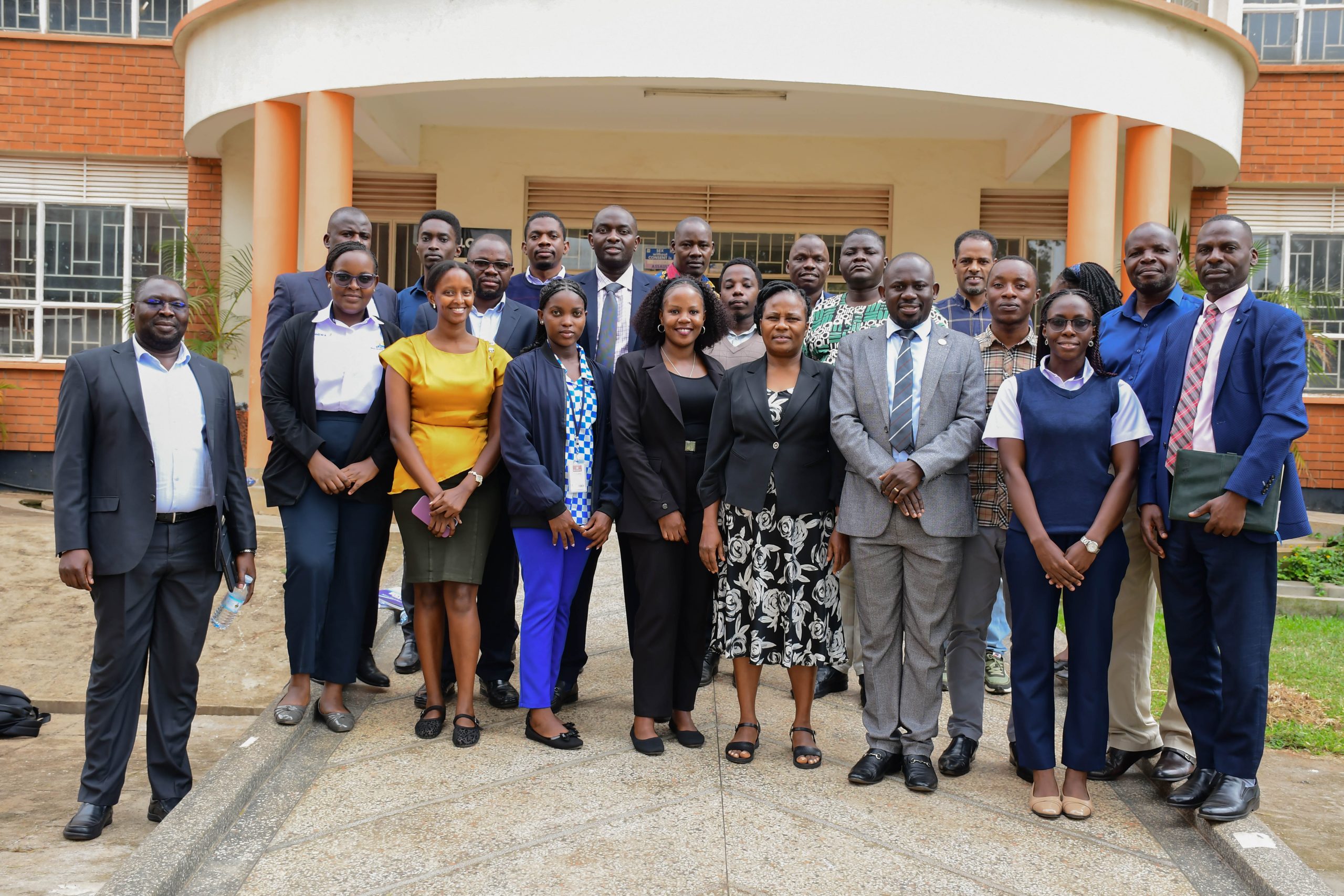
The seminar brought together a visiting World Bank scholar, officials from the Uganda Revenue Authority (URA), academic staff from the School of Economics, School of Business, and School of Statistics and Planning, as well as Masters’ and PhD students including: Dr Aimable Nsabimana- Senior Statistician at the International Finance Corporation (IFC) of the World Bank Group, Dr Peter Babyenda-Policy Engagement Coordinator at CoBAMS, Associate Prof. Ibrahim M. Okumu-Dean of the School of Economics, Mr. Nicholas Musoke- AG. Manager Research, Statistics and Revenue Modelling at URA, Mr. Ssebuyira Sebastian-Research Expert at URA and Prof. Susan Namirembe Kavuma- the Head of the Department of Policy and Development Economics among others.